Ackermann, Max - 1887 Berlin ? Unterlengenhardt 1975:
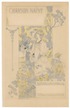
Ohne Titel, 1958. Pastell, auf blauem Bütten, rechts unten signiert und datiert ?Ackermann 58?. 49:31,2 cm. Verso mit eigenhändiger Widmung ?für Dieter Hoffmann 8. XI. 68 Max Ackermann?. Der Maler und Grafiker Max Ackermann zählt sicher zu den bedeutendsten Künstlern der Abstraktion in Deutschland. Zuerst in Weimar 1907/1908 als Schüler H. van de Veldes und parallel als Schüler der Weimarer Malerschule bei H. Olde und L. von Hofmann setzt Ackermann bis 1810 sein Studium in Dresden und München fort, zieht aber enttäuscht vom akademischen Lehrbetrieb 1912 nach Stuttgart, wo er 1913 Meisterschüler Hölzels wird. 1917 wegen längerem Lazarettaufenthalt als kriegsuntauglich entlassen, lebt er weiterhin in Stuttgart. 1936 erhält er Arbeitsverbot und zieht nach Hoornstaad am Bodensee. Im Jahr darauf werden seine Arbeiten als entartet" diffamiert. 1943 wird sein Atelier und damit ein Teil seiner Arbeiten bei einem Bombenangriff zerstört. 1957 wird ihm der Professorentitel h.c. verliehen; im gleichen Jahr Rückkehr nach Stuttgart.
Bestellnummer: 119-H - Aus Liste: Zeichnungen und Aquarelle - 20. Jh. / drawings and watercolours - 20th cent. - Graphiken
Versandkosten frei ab 500.00 EUR (Deutschland). Anbieter:
Galerie Joseph Fach GmbH, D - 61440 Oberursel im Taunus - AGB / Widerrufsbelehrung / Datenschutzerklärung / Frage zu diesem Angebot stellen
Behmer, Marcus - 1879 Weimar - Berlin 1958:
Goldene Maske. Aquarell und Goldbronze, über Bleistift, auf Bütten mit Fragment des Wasserzeichens: Wappen Estados unidos de Brazil, rechts unten signiert und datiert ?Marcus Behmer 34?, rechts oben nummeriert ?XIII?, verso nochmals datiert ?6.III.34 11 AM?. Dar-stellungsgröße ca. 7,5:7,5 cm, Blattgröße 22,8:16,5 cm. Vergleichsliteratur: Ausst. Katalog: Delphine in Offenbach. Marcus Behmer Meister der kleinen Formate. Offenbach Klingspor Museum, 2018, Abb. 441 u. 442. Wir danken Peter Christian Hall, Frankfurt/Main für folgende Hinweise am 25.IV.2019: ??, dass es bei Marcus Behmer, nach seiner fluchtartigen Rückkehr aus dem faschistischen Italien und nach seinem Rückzug nach Heiligenholz auf das Gut seiner Freunde Dr. Georg und Dr. Eva Licht?, eine Annäherung an den Expressionismus gegeben hat, wie er sich beispielsweise in den beiden großartigen und verblüffenden Selbstporträts aus dem Städel erkennen lässt, die beide dort in 30er Jahren entstanden sind. Möglicherweise ergibt sich daraus auch eine Ver-bindung zu Ihren beiden Masken. Masken sind mir in der Sammlung des Klingspor Museums und auch sonst nicht begegnet.? Der als Zeichner und Illustrator tätige Marcus Behmer, Sohn des Malers Hermann Behmer (1831-1915), bildete sich im Wesentlichen autodidaktisch aus. Schnelle Bekanntheit erlangte er durch seine originellen, zeitweise auch grotesken Zeichnungen. Tätig war er für die Münch-ner Vereinigten Werkstätten, den Simplicissimus, die Insel und Ver Sacrum.
Bestellnummer: 068-H - Aus Liste: Zeichnungen und Aquarelle - 20. Jh. / drawings and watercolours - 20th cent. - Graphiken
Versandkosten frei ab 500.00 EUR (Deutschland). Anbieter:
Galerie Joseph Fach GmbH, D - 61440 Oberursel im Taunus - AGB / Widerrufsbelehrung / Datenschutzerklärung / Frage zu diesem Angebot stellen
Behmer, Marcus - 1879 Weimar - Berlin 1958:
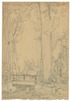
Neumühle bei Sassenhagen, kleine Brücke zwischen hohen Bäumen, rechts angeschnitten eine Mühle 1925. Bleistift, auf bräunlichem Velin, links unten signiert, rechts unten datiert ?11.VII 25?, verso nochmals datiert und bezeichnet ?11.VII.25. Neumühle bei Sassenhagen i. Pommern. Mühlbach-Brücke und, rechts, Mühle.?. 31,3:24,2 cm. Der als Zeichner und Illustrator tätige Marcus Behmer, Sohn des Malers Hermann Behmer (1831-1915), bildete sich im Wesentlichen autodidaktisch aus. Schnelle Bekanntheit erlangte er durch seine originellen, zeitweise auch grotesken Zeichnungen. Tätig war er für die Münch-ner Vereinigten Werkstätten, den Simplicissimus, die Insel und Ver Sacrum.
Bestellnummer: 066-H - Aus Liste: Zeichnungen und Aquarelle - 20. Jh. / drawings and watercolours - 20th cent. - Graphiken
Versandkosten frei ab 500.00 EUR (Deutschland). Anbieter:
Galerie Joseph Fach GmbH, D - 61440 Oberursel im Taunus - AGB / Widerrufsbelehrung / Datenschutzerklärung / Frage zu diesem Angebot stellen
Behmer, Marcus - 1879 Weimar - Berlin 1958:
Totenmaske eines grossen Geigers. (Sarasate x Chopin), Sarasate mit Bleistift durchgestrichen und mit Bleistift ergänzt Paganini. Tusche, Aquarell in Blau und Grün und Goldbronze, auf Bütten mit Wasserzeichen: Wappen Estados unidos de Brazil, rechts oben nummeriert ?XIV?, verso betitelt und datiert ?6.III.34?. 9,2:6,5 cm, Blattgröße 16,5:22,8 cm. Vergleichsliteratur: Ausst. Katalog: Delphine in Offenbach. Marcus Behmer Meister der kleinen Formate. Offenbach Klingspor Museum, 2018, Abb. 441 u. 442. Wir danken Peter Christian Hall, Frankfurt/Main für folgende Hinweise am 25.IV.2019: ??, dass es bei Marcus Behmer, nach seiner fluchtartigen Rückkehr aus dem faschistischen Italien und nach seinem Rückzug nach Heiligenholz auf das Gut seiner Freunde Dr. Georg und Dr. Eva Licht?, eine Annäherung an den Expressionismus gegeben hat, wie er sich beispielsweise in den beiden großartigen und verblüffenden Selbstporträts aus dem Städel erkennen lässt, die beide dort in 30er Jahren entstanden sind. Möglicherweise ergibt sich daraus auch eine Ver-bindung zu Ihren beiden Masken. Masken sind mir in der Sammlung des Klingspor Museums und auch sonst nicht begegnet.? Der als Zeichner und Illustrator tätige Marcus Behmer, Sohn des Malers Hermann Behmer (1831-1915), bildete sich im Wesentlichen autodidaktisch aus. Schnelle Bekanntheit erlangte er durch seine originellen, zeitweise auch grotesken Zeichnungen. Tätig war er für die Münch-ner Vereinigten Werkstätten, den Simplicissimus, die Insel und Ver Sacrum.
Bestellnummer: 069-H - Aus Liste: Zeichnungen und Aquarelle - 20. Jh. / drawings and watercolours - 20th cent. - Graphiken
Versandkosten frei ab 500.00 EUR (Deutschland). Anbieter:
Galerie Joseph Fach GmbH, D - 61440 Oberursel im Taunus - AGB / Widerrufsbelehrung / Datenschutzerklärung / Frage zu diesem Angebot stellen
Bernstein, Moshe - 1920 Polen - Tel Aviv 2006:
Büste eines jüdischen Mädchens mit Kappe, den Oberkörper nach rechts gewandt, der Kopf en face. Pinsel in Schwarz, auf gelblichem strukturiertem Papier, links unten signiert. 39,7:29 cm. Verso an den Rändern Reste einer alten Verklebung. Provenienz: Frankfurter Privatbesitz. Seine Studien an der Akademie in Vilna schloß Bernstein 1939 ab. Seine Familie wurde im Holocaust ausgelöscht, doch er überlebte in Russland, wo er bis 1947 ansässig war. Bei dem Versuch nach Palästine zu emigrieren, wurde er gefangen genommen und verbrachte eine Zeit in einem Lager auf Cypern. Seit 1948 lebte er in Palästina als Maler und Illustrator und war mit seinen Werken in zahlreichen Ausstellungen vertreten. Er war eine kannte Figur in Tel Avivs Bohème und der dortigen Kunstwelt.
Bestellnummer: 022-H - Aus Liste: Zeichnungen und Aquarelle - 20. Jh. / drawings and watercolours - 20th cent. - Graphiken
Versandkosten frei ab 500.00 EUR (Deutschland). Anbieter:
Galerie Joseph Fach GmbH, D - 61440 Oberursel im Taunus - AGB / Widerrufsbelehrung / Datenschutzerklärung / Frage zu diesem Angebot stellen
Born, Franz - 1881 Frankfurt/Main - Mazedonien 1917:
Römischer Tempel, der in einer Landschaft mit Gewässer und Bäumen steht. Römischer Tempel, der in einer Landschaft mit Gewässer und Bäumen steht. Entwurf für ein Exlibris für Franz Born. Feder in Schwarz, auf cremefarbenem Japan, rechts unten datiert und monogrammiert ?19 FB 03?, rechts unten signiert ?Franz Born?. 29,7:24,4 cm. Unter der Darstellung befindet sich der Spruch des römischen Gelehrten Aulus Gelius (2. Jh. n. Chr.) ?Introite nam et hic Dii sunt? (Tretet ein, denn auch hier sind (die) Götter), den G. E. Lessing seinem ?Nathan der Weise? voranstellte. Der Sohn des Frankfurter Bildhauers Franz Jakob Born (gest. 1902) machte zuerst eine Lehre in der Werkstatt seines Vaters. Nach dessen Tod zog er nach Berlin, studierte 1904/05 in München bei Fritz Hausmann und kehrte danach wieder nach Berlin zurück. Hier wandte er sich zunehmend der Malerei zu, besonders der Landschaftsmalerei. In dieser Zeit nahm Stunden in den ?Studienateliers für Malerei und Plastik? bei Lovis Corinth (1858-1915). Er unternahm Studienreisen innerhalb Deutschlands, ehe er 1910 in Detmold sesshaft wurde. 1911 kam er erstmals zu einem längeren Aufenthalt nach Schmalenberg und gehörte in Folge zur ?Schmalenberger Malerkolonie?. In dieser Zeit arbeitete er hauptsächlich als Maler und entwickelte seine ganz ?eigene Handschrift?. 1914 meldete er sich als Freiwilliger und kämpfte auf verschiedenen Kriegsschauplätzen, bevor er 1917 in Mazedonien an einem Fieber verstarb.
Bestellnummer: 062-H - Aus Liste: Zeichnungen und Aquarelle - 20. Jh. / drawings and watercolours - 20th cent. - Graphiken
Versandkosten frei ab 500.00 EUR (Deutschland). Anbieter:
Galerie Joseph Fach GmbH, D - 61440 Oberursel im Taunus - AGB / Widerrufsbelehrung / Datenschutzerklärung / Frage zu diesem Angebot stellen
Breuer, Leo - 1893 Bonn-Endenich ? Bonn 1975:
Vier auf Bänken sitzende Interierte mit einer Krankenschwester. Schwarze Tusche, Aquarell und Deckfarben, auf Bütten, links unten bezeichnet und signiert ?à mon ami Janssen Léo Breuer.?. 47,5:62,8 cm.- Falten geglättet. Geschildert wird hier eine Szene, die Leo Breuer während seiner Internierungszeit von 1940-1941 im Lager von St. Cyprien (Perpignan) oder Gurs beobachtet hat. Vergleichbare Arbeiten sind abgebildet im Katalog ?Leo Breuer 1893 ? 1975 Retrospektive?. Ludwigshafen und Bonn, 1993, pp. 124/125.- Nach Aussage des französischen Vorbesitzers des Aquarells gilt die Widmung dem Arzt Leo Breuers.
Bestellnummer: 121-H - Aus Liste: Zeichnungen und Aquarelle - 20. Jh. / drawings and watercolours - 20th cent. - Graphiken
Versandkosten frei ab 500.00 EUR (Deutschland). Anbieter:
Galerie Joseph Fach GmbH, D - 61440 Oberursel im Taunus - AGB / Widerrufsbelehrung / Datenschutzerklärung / Frage zu diesem Angebot stellen
Clark, Eliot - 1883 ? New York ? 1980:
A couple sitting on a bench enjoying the sunset. Black chalk, surrounded by one line, on handmade paper, signed in blue ?Eliot Clark?, verso studio stamp. 22,2:28,9 cm. ?Son of the prominent Tonalist landscape painter Walter Clark, Eliot Clark came of age in his father?s New York studio surrounded by some of the foremost artists of his time, including John Twachtman, Edward Potthast, Joseph De Camp, and Frank Duveneck. He later recalled that he ?grew unconsciously in the association of artists, of studio talk and that smell of paint and turpentine.? Eliot also accompanied his father on painting trips, traveling in New England and to the American West in 1901. On these excursions, Clark was encouraged to experience, as well as to observe, in order that he might be able to compose landscape works based on memory, as well as detailed sketches. After a brief period of study at the Art Students League, Clark made the obligatory study trip to Europe in 1904. He did not enroll at one of the established academies, but instead traveled extensively on his own, observing old master paintings and painting en plein air at various sites favored by the Barbizon artists. Arriving in London in 1905, he made a special point of viewing a memorial exhibition of the works of James Abbott McNeill Whistler at the New Gallery. Afterwards, he wrote to his father that he admired Whistler?s ?use of color, and subtle arrangement of line and balance of masses.? That influence, and his development of a personal understanding of close color harmonics, is the most identifiable characteristic of Clark?s art. Not long after his return to New York in 1906, Clark opened a studio in the Van Dyke Studio Building where several other Tonalist painters also maintained spaces. From there, he began creating works with powerful light, minimal color differential, and an intentional focus upon the inherent grace of the passing moment. Deeply involved in the city?s art scene, he was elected an associate member of the National Academy of Design in 1917, an affiliation that would prove especially meaningful. Over the course of his career, Clark held the offices of corresponding secretary, vice-president, and finally as president of the organization from 1956?1959. He also served as curator/conservator of the Academy?s collection, stabilizing the large and disparate holdings and eventually publishing a comprehensive history of the institution in 1954. Clark authored a series of monographs on his favorite artists, favoring the work of such Impressionist and Tonalist masters as Childe Hassam and Gustave Courbet over his more modern contemporaries. During this same period, he taught classes at the Art Students League and exhibited widely. As a successful and well connected practitioner of the lingering Impressionist impulse in American art, Clark received invitations to serve as the annual visiting instructor at the Savannah Art Club in 1924 and 1925. For two consecutive winters, Clark reveled in the city?s lush environs, welcoming it as a point of new beginnings. His Savannah ?interlude was delightful. . . The picturesque city with its silvery southern light, its many gardens, and ancient live oaks hung with gray moss? entranced the artist. His work is represented in the Telfair?s permanent collection, as well as the collections of other institutions such as the Smithsonian American Art Museum, Washington, the Parrish Art Museum, Water Mill/New York and the Weisman Art Museum, Minneapolis.? (Zit.: thejohnsoncollection/eliot-clark).
Bestellnummer: 110-H - Aus Liste: Zeichnungen und Aquarelle - 20. Jh. / drawings and watercolours - 20th cent. - Graphiken
Versandkosten frei ab 500.00 EUR (Deutschland). Anbieter:
Galerie Joseph Fach GmbH, D - 61440 Oberursel im Taunus - AGB / Widerrufsbelehrung / Datenschutzerklärung / Frage zu diesem Angebot stellen
Clark, Eliot - 1883 ? New York ? 1980:
Autumn landscape with falling leafs. Black chalk, surround by one line, on handmade paper, signed in blue ?Eliot Clark?, verso studio stamp. 29,4:22,5 cm. ?Son of the prominent Tonalist landscape painter Walter Clark, Eliot Clark came of age in his father?s New York studio surrounded by some of the foremost artists of his time, including John Twachtman, Edward Potthast, Joseph De Camp, and Frank Duveneck. He later recalled that he ?grew unconsciously in the association of artists, of studio talk and that smell of paint and turpentine.? Eliot also accompanied his father on painting trips, traveling in New England and to the American West in 1901. On these excursions, Clark was encouraged to experience, as well as to observe, in order that he might be able to compose landscape works based on memory, as well as detailed sketches. After a brief period of study at the Art Students League, Clark made the obligatory study trip to Europe in 1904. He did not enroll at one of the established academies, but instead traveled extensively on his own, observing old master paintings and painting en plein air at various sites favored by the Barbizon artists. Arriving in London in 1905, he made a special point of viewing a memorial exhibition of the works of James Abbott McNeill Whistler at the New Gallery. Afterwards, he wrote to his father that he admired Whistler?s ?use of color, and subtle arrangement of line and balance of masses.? That influence, and his development of a personal understanding of close color harmonics, is the most identifiable characteristic of Clark?s art. Not long after his return to New York in 1906, Clark opened a studio in the Van Dyke Studio Building where several other Tonalist painters also maintained spaces. From there, he began creating works with powerful light, minimal color differential, and an intentional focus upon the inherent grace of the passing moment. Deeply involved in the city?s art scene, he was elected an associate member of the National Academy of Design in 1917, an affiliation that would prove especially meaningful. Over the course of his career, Clark held the offices of corresponding secretary, vice-president, and finally as president of the organization from 1956?1959. He also served as curator/conservator of the Academy?s collection, stabilizing the large and disparate holdings and eventually publishing a comprehensive history of the institution in 1954. Clark authored a series of monographs on his favorite artists, favoring the work of such Impressionist and Tonalist masters as Childe Hassam and Gustave Courbet over his more modern contemporaries. During this same period, he taught classes at the Art Students League and exhibited widely. As a successful and well connected practitioner of the lingering Impressionist impulse in American art, Clark received invitations to serve as the annual visiting instructor at the Savannah Art Club in 1924 and 1925. For two consecutive winters, Clark reveled in the city?s lush environs, welcoming it as a point of new beginnings. His Savannah ?interlude was delightful. . . The picturesque city with its silvery southern light, its many gardens, and ancient live oaks hung with gray moss? entranced the artist. His work is represented in the Telfair?s permanent collection, as well as the collections of other institutions such as the Smithsonian American Art Museum, Washington, the Parrish Art Museum, Water Mill/New York and the Weisman Art Museum, Minneapolis.? (Zit.: thejohnsoncollection/eliot-clark).
Bestellnummer: 115-H - Aus Liste: Zeichnungen und Aquarelle - 20. Jh. / drawings and watercolours - 20th cent. - Graphiken
Versandkosten frei ab 500.00 EUR (Deutschland). Anbieter:
Galerie Joseph Fach GmbH, D - 61440 Oberursel im Taunus - AGB / Widerrufsbelehrung / Datenschutzerklärung / Frage zu diesem Angebot stellen
Clark, Eliot - 1883 ? New York ? 1980:
City landscape at night. Black and white chalk, surrounded by one line, on green paper, signed ?Eliot Clark?, verso studio stamp. 19,3:20,7 cm. ?Son of the prominent Tonalist landscape painter Walter Clark, Eliot Clark came of age in his father?s New York studio surrounded by some of the foremost artists of his time, including John Twachtman, Edward Potthast, Joseph De Camp, and Frank Duveneck. He later recalled that he ?grew unconsciously in the association of artists, of studio talk and that smell of paint and turpentine.? Eliot also accompanied his father on painting trips, traveling in New England and to the American West in 1901. On these excursions, Clark was encouraged to experience, as well as to observe, in order that he might be able to compose landscape works based on memory, as well as detailed sketches. After a brief period of study at the Art Students League, Clark made the obligatory study trip to Europe in 1904. He did not enroll at one of the established academies, but instead traveled extensively on his own, observing old master paintings and painting en plein air at various sites favored by the Barbizon artists. Arriving in London in 1905, he made a special point of viewing a memorial exhibition of the works of James Abbott McNeill Whistler at the New Gallery. Afterwards, he wrote to his father that he admired Whistler?s ?use of color, and subtle arrangement of line and balance of masses.? That influence, and his development of a personal understanding of close color harmonics, is the most identifiable characteristic of Clark?s art. Not long after his return to New York in 1906, Clark opened a studio in the Van Dyke Studio Building where several other Tonalist painters also maintained spaces. From there, he began creating works with powerful light, minimal color differential, and an intentional focus upon the inherent grace of the passing moment. Deeply involved in the city?s art scene, he was elected an associate member of the National Academy of Design in 1917, an affiliation that would prove especially meaningful. Over the course of his career, Clark held the offices of corresponding secretary, vice-president, and finally as president of the organization from 1956?1959. He also served as curator/conservator of the Academy?s collection, stabilizing the large and disparate holdings and eventually publishing a comprehensive history of the institution in 1954. Clark authored a series of monographs on his favorite artists, favoring the work of such Impressionist and Tonalist masters as Childe Hassam and Gustave Courbet over his more modern contemporaries. During this same period, he taught classes at the Art Students League and exhibited widely. As a successful and well connected practitioner of the lingering Impressionist impulse in American art, Clark received invitations to serve as the annual visiting instructor at the Savannah Art Club in 1924 and 1925. For two consecutive winters, Clark reveled in the city?s lush environs, welcoming it as a point of new beginnings. His Savannah ?interlude was delightful. . . The picturesque city with its silvery southern light, its many gardens, and ancient live oaks hung with gray moss? entranced the artist. His work is represented in the Telfair?s permanent collection, as well as the collections of other institutions such as the Smithsonian American Art Museum, Washington, the Parrish Art Museum, Water Mill/New York and the Weisman Art Museum, Minneapolis.? (Zit.: thejohnsoncollection/eliot-clark).
Bestellnummer: 116-H - Aus Liste: Zeichnungen und Aquarelle - 20. Jh. / drawings and watercolours - 20th cent. - Graphiken
Versandkosten frei ab 500.00 EUR (Deutschland). Anbieter:
Galerie Joseph Fach GmbH, D - 61440 Oberursel im Taunus - AGB / Widerrufsbelehrung / Datenschutzerklärung / Frage zu diesem Angebot stellen
Clark, Eliot - 1883 ? New York ? 1980:
Clearing at the edge of the forest and big tree. Black chalk, surround by one line, on handmade paper, signed in blue ?Eliot Clark?, verso studio stamp. 22,8:30,4 cm. ?Son of the prominent Tonalist landscape painter Walter Clark, Eliot Clark came of age in his father?s New York studio surrounded by some of the foremost artists of his time, including John Twachtman, Edward Potthast, Joseph De Camp, and Frank Duveneck. He later recalled that he ?grew unconsciously in the association of artists, of studio talk and that smell of paint and turpentine.? Eliot also accompanied his father on painting trips, traveling in New England and to the American West in 1901. On these excursions, Clark was encouraged to experience, as well as to observe, in order that he might be able to compose landscape works based on memory, as well as detailed sketches. After a brief period of study at the Art Students League, Clark made the obligatory study trip to Europe in 1904. He did not enroll at one of the established academies, but instead traveled extensively on his own, observing old master paintings and painting en plein air at various sites favored by the Barbizon artists. Arriving in London in 1905, he made a special point of viewing a memorial exhibition of the works of James Abbott McNeill Whistler at the New Gallery. Afterwards, he wrote to his father that he admired Whistler?s ?use of color, and subtle arrangement of line and balance of masses.? That influence, and his development of a personal understanding of close color harmonics, is the most identifiable characteristic of Clark?s art. Not long after his return to New York in 1906, Clark opened a studio in the Van Dyke Studio Building where several other Tonalist painters also maintained spaces. From there, he began creating works with powerful light, minimal color differential, and an intentional focus upon the inherent grace of the passing moment. Deeply involved in the city?s art scene, he was elected an associate member of the National Academy of Design in 1917, an affiliation that would prove especially meaningful. Over the course of his career, Clark held the offices of corresponding secretary, vice-president, and finally as president of the organization from 1956?1959. He also served as curator/conservator of the Academy?s collection, stabilizing the large and disparate holdings and eventually publishing a comprehensive history of the institution in 1954. Clark authored a series of monographs on his favorite artists, favoring the work of such Impressionist and Tonalist masters as Childe Hassam and Gustave Courbet over his more modern contemporaries. During this same period, he taught classes at the Art Students League and exhibited widely. As a successful and well connected practitioner of the lingering Impressionist impulse in American art, Clark received invitations to serve as the annual visiting instructor at the Savannah Art Club in 1924 and 1925. For two consecutive winters, Clark reveled in the city?s lush environs, welcoming it as a point of new beginnings. His Savannah ?interlude was delightful. . . The picturesque city with its silvery southern light, its many gardens, and ancient live oaks hung with gray moss? entranced the artist. His work is represented in the Telfair?s permanent collection, as well as the collections of other institutions such as the Smithsonian American Art Museum, Washington, the Parrish Art Museum, Water Mill/New York and the Weisman Art Museum, Minneapolis.? (Zit.: thejohnsoncollection/eliot-clark).
Bestellnummer: 112-H - Aus Liste: Zeichnungen und Aquarelle - 20. Jh. / drawings and watercolours - 20th cent. - Graphiken
Versandkosten frei ab 500.00 EUR (Deutschland). Anbieter:
Galerie Joseph Fach GmbH, D - 61440 Oberursel im Taunus - AGB / Widerrufsbelehrung / Datenschutzerklärung / Frage zu diesem Angebot stellen
Clark, Eliot - 1883 ? New York ? 1980:
Group of trees and bushes in mountains. Black chalk, on brown paper, signed with pencil ?Eliot Clark?, verso studio stamp. 22,7:30 cm. ?Son of the prominent Tonalist landscape painter Walter Clark, Eliot Clark came of age in his father?s New York studio surrounded by some of the foremost artists of his time, including John Twachtman, Edward Potthast, Joseph De Camp, and Frank Duveneck. He later recalled that he ?grew unconsciously in the association of artists, of studio talk and that smell of paint and turpentine.? Eliot also accompanied his father on painting trips, traveling in New England and to the American West in 1901. On these excursions, Clark was encouraged to experience, as well as to observe, in order that he might be able to compose landscape works based on memory, as well as detailed sketches. After a brief period of study at the Art Students League, Clark made the obligatory study trip to Europe in 1904. He did not enroll at one of the established academies, but instead traveled extensively on his own, observing old master paintings and painting en plein air at various sites favored by the Barbizon artists. Arriving in London in 1905, he made a special point of viewing a memorial exhibition of the works of James Abbott McNeill Whistler at the New Gallery. Afterwards, he wrote to his father that he admired Whistler?s ?use of color, and subtle arrangement of line and balance of masses.? That influence, and his development of a personal understanding of close color harmonics, is the most identifiable characteristic of Clark?s art. Not long after his return to New York in 1906, Clark opened a studio in the Van Dyke Studio Building where several other Tonalist painters also maintained spaces. From there, he began creating works with powerful light, minimal color differential, and an intentional focus upon the inherent grace of the passing moment. Deeply involved in the city?s art scene, he was elected an associate member of the National Academy of Design in 1917, an affiliation that would prove especially meaningful. Over the course of his career, Clark held the offices of corresponding secretary, vice-president, and finally as president of the organization from 1956?1959. He also served as curator/conservator of the Academy?s collection, stabilizing the large and disparate holdings and eventually publishing a comprehensive history of the institution in 1954. Clark authored a series of monographs on his favorite artists, favoring the work of such Impressionist and Tonalist masters as Childe Hassam and Gustave Courbet over his more modern contemporaries. During this same period, he taught classes at the Art Students League and exhibited widely. As a successful and well connected practitioner of the lingering Impressionist impulse in American art, Clark received invitations to serve as the annual visiting instructor at the Savannah Art Club in 1924 and 1925. For two consecutive winters, Clark reveled in the city?s lush environs, welcoming it as a point of new beginnings. His Savannah ?interlude was delightful. . . The picturesque city with its silvery southern light, its many gardens, and ancient live oaks hung with gray moss? entranced the artist. His work is represented in the Telfair?s permanent collection, as well as the collections of other institutions such as the Smithsonian American Art Museum, Washington, the Parrish Art Museum, Water Mill/New York and the Weisman Art Museum, Minneapolis.? (Zit.: thejohnsoncollection/eliot-clark).
Bestellnummer: 095-H - Aus Liste: Zeichnungen und Aquarelle - 20. Jh. / drawings and watercolours - 20th cent. - Graphiken
Versandkosten frei ab 500.00 EUR (Deutschland). Anbieter:
Galerie Joseph Fach GmbH, D - 61440 Oberursel im Taunus - AGB / Widerrufsbelehrung / Datenschutzerklärung / Frage zu diesem Angebot stellen

 Englisch
 Französisch
 Warenkorb





 In den Warenkorb
 Artikel merken
 Weiterempfehlen